

Insights, Methods & Perspectives.
Explore our collection of articles, frameworks, and practical tools designed to inspire leaders and reshape team dynamics.
On conversations & experience
"After 30 years in leadership, what truly persists aren't the daily fires fought or the perfect presentations. It is the psychological safety you created and the people you helped grow. Experience isn't meant to be hoarded; its real value is unlocked when it helps the next generation of leaders take their next step with clarity and confidence."
Conversations — Ideas inspired by what happens in and beyond the House.

Why force yourself into noisy rooms when real connections happen in quieter spaces?
Many leaders view networking as a necessary chore—pushing themselves into crowded events and exhausting their mental energy trying to perform.
At AMH Dawn Consulting, we believe your energy is your most precious asset. Forcing yourself into formats that do not match your personality drains the very enthusiasm and clarity your clients rely on.
True networking isn't about collecting contacts; it's about staying aligned with who you are—whether through quiet one-on-one conversations or small, reflective gatherings
On Networking & Energy Alignment
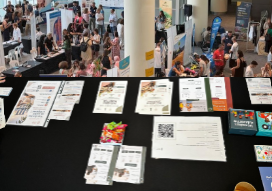

The conversation Table
Small-group gatherings to explore a single perspective, together.
Beyond reading, ideas grow when we sit with them and share our experiences.
Join a quiet, facilitated 1-hour exchange around a specific topic. Co-hosted by Anne-Marie Hedon (AMH Dawn Consulting) and Adeline Marie (Orga-Coaching), these sessions are limited to 8 participants to ensure every voice is heard.
Upcoming Gathering
Professional Misalignment — When the direction no longer feels right
A quiet space to reflect on the gap between where you are and where you truly belong, explore subtle shifts in career or leadership, and share experiences without judgment.
Upcoming Sessions:
French session: October 15th | 8:30 – 9:30 am (SGT)
English session: October 16th | 8:30 – 9:30 am (SGT)
Good to know before joining
Complimentary Gathering: Participation is entirely free. When hosted in-person at a café in Singapore (CBD), each participant simply covers their own drink or food.
Co-facilitated Dialogue: A shared space hosted together with Adeline Marie (Orga-Coaching) to bring complementary perspectives to the table.
Intimate Setting: Sessions are capped at 8 participants to foster genuine, safe, and unhurried dialogue.
No Presentation or Pitch: We don't come with slides or answers—just a clear, thoughtful question to start the conversation.
Complimentary: These gatherings are simply an invitation to connect, reflect, and move forward together.
Reserve a seat at the table
Organisations — Culture, change, collaboration and movement.
What if a multi-generational team isn't a challenge, but a catalyst?
Age and generational shifts are often framed as friction. I see them as an invitation to challenge our assumptions.
Fresh perspectives and digital instincts don't replace experience—they enrich it. But true synergy doesn't happen by default; it requires deliberate spaces where every voice can be heard without being flattened. The goal isn't to make everyone think alike, but to build the listening conditions where different perspectives meet.
Because progress begins with a better conversation.
On team dynamics & friction
"In fast-paced, cross-functional environments, urgency often sets the rhythm. But what we sometimes perceive as resistance or misalignment is simply a different way of processing the world. Collaboration doesn't start with agreement—it starts with understanding. Once a team has permission to pause and listen, difference transforms from friction into fusion."
On leadership & isolation
"Everything seems to need a decision, and there is often no space to stop and think. Yet clarity rarely comes from isolation; it emerges through connection. We do not always need someone to give us the answer—sometimes, we simply need a conversation that helps us see more clearly what could come next."
Ideas, books, experiences and conversations that have shaped the way I think about people, teams and change.
This is not a list of “the books you should read”. It is a collection of things that have caught my attention, made me think, challenged the way I see something — or simply stayed with me over time. For each one, I want to share three things:
What brought me to it
A book, an experience, a conversation, a training course, a situation at work…
What caught my attention
Not a summary, but the idea, question or insight that stayed with me.
What I take from it today
What it has changed in the way I look at people, teams, organisations or change.
One example: The Subtle Art of the Nudge
Changing the environment rather than asking people to change
I discovered the concept of nudging a few years ago, as part of a training programme exploring some of the challenges women face in the workplace.
I immediately liked the approach because it was pragmatic, concrete and easy to understand.
Rather than trying to convince people to behave differently, or imposing a new rule, a nudge looks at how we can slightly change the environment in which a choice is made.
One example particularly stayed with me.
Imagine that coffee is traditionally served with sugar by default. Now imagine simply changing the default: the coffee is served without sugar, while everyone remains free to add it.
A very small change. Yet for some people, it can reduce a consumption of sugar that had previously happened almost unconsciously.
That is what I find so interesting about nudging.
You don't necessarily have to change people's minds. Sometimes, you can change the environment around them.
And I believe this approach could be used much more widely to encourage more appropriate behaviours — particularly within organisations.
It raises an interesting question for me: What if, instead of asking people to change, we first looked at what we could change around them?
But there is an important caveat
A nudge is, by definition, a way of influencing behaviour.
And that is where I think we need to be careful.
At what point does a nudge become manipulation?
Who decides which behaviour should be encouraged? In whose interest? And does the person still have a genuine freedom of choice?
For me, ethics cannot be separated from the use of this kind of tool.
What I take from it
A few years after reading the book, I still find the concept a useful way of looking at change.
Sometimes, you don't need to change everything to change something.
A small adjustment to the environment can sometimes make a significant difference.
But a tool that can influence behaviour deserves to be used with care.
Perhaps not a tool to put in just anyone's hands… 😉
Where to next?
Ready to talk?
Want to explore more?
Step into The Kitchen to see how we help teams align